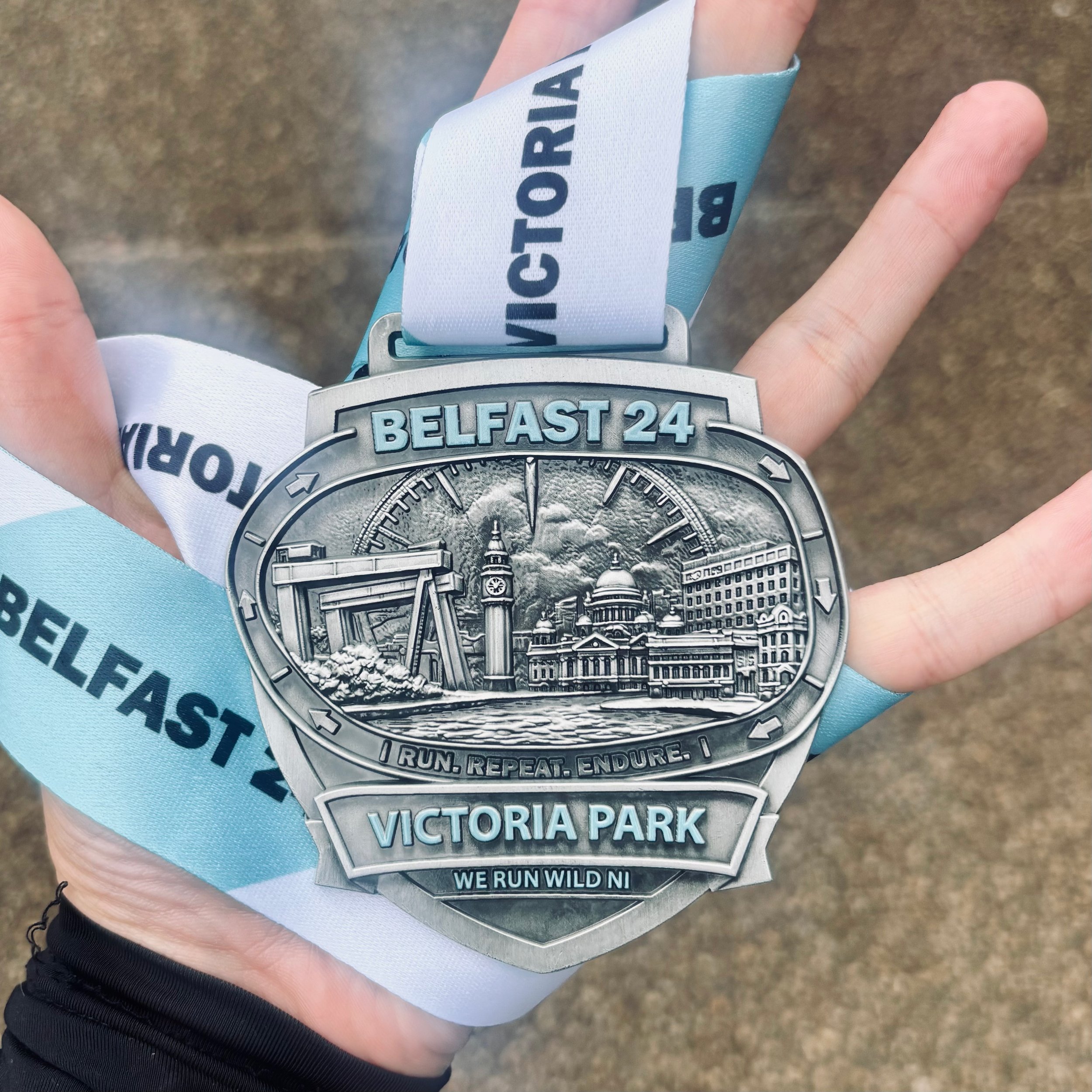
Race Report: Belfast 24 Hour 2026
As much as I love a good plan, they rarely survive first contact with reality.
The weather changes. Your legs change. Your stomach changes. Sometimes your ambitions have to change too.
I've come to realise that success in ultrarunning has less to do with executing the perfect plan than it does recognising when it's time to change it.
A return to Victoria Park wasn’t initially planned for this year. Having run the event twice before, it wasn’t a race I’d come away from feeling I’d left much unfinished.
But a lot had changed since my last visit in 2024. I’d accumulated a wealth of experience, including two 100-mile finishes, and found myself curious to revisit the same course as a very different version of myself. Plus, with the race now under the We Run Wild umbrella, I wanted to see how the team would make it their own.
Sitting beneath the club gazebo, finalising preparations and working through my pre-race rituals, I reflected on the handful of ultras I’d completed since my last visit. On the one hand, I didn’t fear the challenge in quite the same way I might have before. On the other, I certainly felt the pressure to be two years better.
Saturday 25th July, 10:00am
We arrived in good time to find that my club mates had already pitched the gazebos that would become our home for the next twenty-four hours. This weekend would also find me in unfamiliar territory, with so many fellow PRC members around me. Usually, my ultras are undertaken largely in solitude, or at least without many familiar faces for company.
As a club, we had around twenty-four runners taking part across the various events. Five of us were tackling the full 24-hour race, one the 100km, two the 50km, while four relay teams would help keep the course lively throughout the weekend. It’s a testament to how far the club has come that our numbers had increased by around twenty runners since we last took part.
Runners and their support crews were free to pitch their bases wherever they could find space, and the final stretch towards the lap line soon resembled a Formula One pit lane. Runners would peel on and off the course for bottles, fresh shoes and perhaps a brief snooze before rejoining, refreshed, and disappearing around the corner for another lap.
From the race start at noon until the finish at noon on Sunday, you’ll witness almost every variation of pacing strategy imaginable. That makes it essential to run your own race and avoid paying too much attention to what everyone else is doing. I’ve always thought that’s what makes this event rather special. Everyone arrives with a different objective, making it one of the few races where success is entirely self-defined.
My definition of success was outlined on a spreadsheet taped to the table beside my pit-stop chair.
You should have seen it. It was colour-coded and everything.
In the weeks since May’s Norn Iron 100, I’d taken a lot of confidence from my performance there and decided I might as well begin with an ambitious target of 200km. However, I stood ready to abandon that notion at any point to protect my primary reason for taking part: running 100 miles in under twenty-four hours.
The plan was to divide the race into four six-hour sections, each ending with fresh socks, a clean shirt and a chance to reset before beginning again.
If I could offer one piece of advice to anyone considering a 24-hour race, it would be this: remain conscious of the time you spend not running. Five minutes here and there doesn’t sound like much, but over twenty-four hours it accumulates remarkably quickly and is almost impossible to win back.
The park offered near-perfect running conditions as we gathered for the race briefing. A thin veil of cloud softened the July sun, while a gentle breeze offered reassurance that the day wouldn’t become too oppressive.
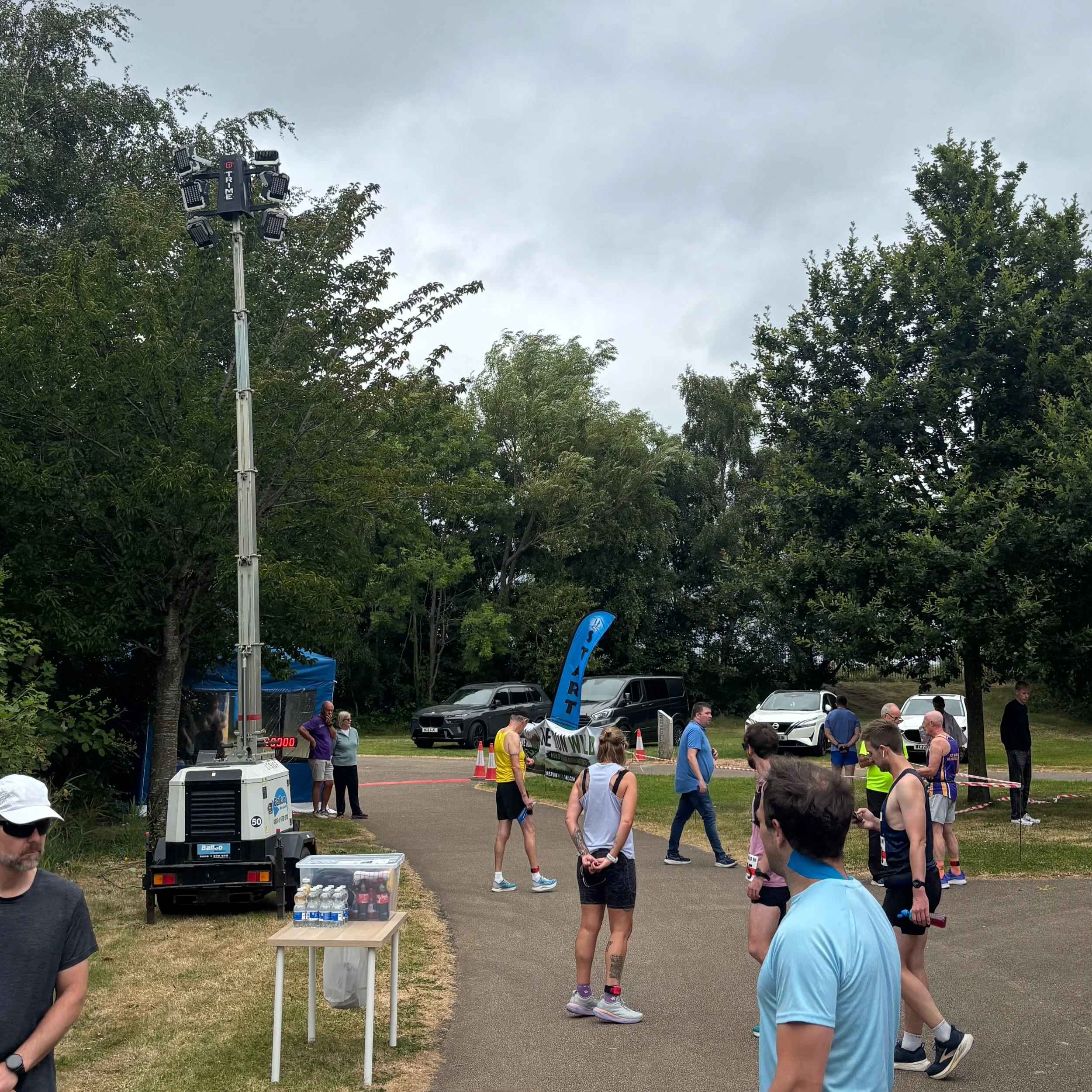
Anticipation gathered with the crowd.
Noon arrived, and we were off.
My plan was to use the opening two hours to shake out any race-start jitters, settle into running eight kilometres each hour, and then walk until the next one began. This, I reasoned, would help regulate my pace while giving my feet regular relief from what is a particularly unforgiving surface to spend twenty-four hours running on.
Four hours in, the cloud that had shielded us all morning quietly drifted away, and the sun announced itself with increasing intensity. It was becoming obvious that my original strategy wasn’t sustainable.The last time I ran this race, I’d probably have fought against that realisation for longer, stubbornly clinging to the plan and pontificating on the virtues of an “ignore the pain” mindset.
But if running ultramarathons has taught me anything, it’s that you eventually have to shake hands with your own capabilities.
There’s no room for ego, and reality doesn’t care about your spreadsheet, colour-coded or not.
So I let it go and adjusted.
I would now run five kilometres at as easy a pace as I could manage, then walk until the hour.
Rinse and repeat.
This adjustment proved to be exactly what I needed. As the fading evening light brought cooler temperatures, my heart rate settled into its familiar rhythm and I finally found the long-race cadence I’d spent all afternoon searching for.
There was an added bonus: the time required to complete the running section of each hour aligned almost perfectly with a playlist I’d created from selected songs on an Ozzy Osbourne live album.
Here’s a free mental game for you all to try.
Make a playlist of live music you enjoy and imagine that you and your friends are the cover band performing it on stage.
You’re welcome.
The tranquillity of the cool evening was periodically interrupted by planes coming and going from nearby Belfast City Airport, and later by rain, which gradually intensified until I was forced into an additional shirt change. I used the opportunity to reach for an alternative pair of shoes, hoping to prevent my primary pair from becoming any wetter and causing problems with my feet later in the race.
As midnight approached, the crowd on the course began to dwindle. The 50km runners were finishing, the 100km field was stretching out, and some competitors were beginning to retire for a little sleep. Saturday gave way to Sunday as I returned to camp for my second of three planned kit changes.
I spent longer than I would have liked in the chair this time, having realised that I needed to replenish almost all the bottles I’d filled with electrolyte mix before the race. The Saturday heat had caused me to burn through fluids at a much faster rate than expected. With the rain appearing to ease, at least temporarily, I swapped back into my go-to shoes. The alternatives were showing their age and weren’t absorbing the impact of the ground as well as I’d hoped.
The quiet around camp in the early hours has a way of amplifying the tiredness and cold you inevitably begin to experience. It was almost as though those resting around me were emitting a contagious fatigue I couldn’t afford to catch.
Needless to say, I tried to gather everything I needed as quickly as possible and got moving again.
As with most races, I knew the third quarter would test me most.
I was determined to dig deep and complete as much work as I could through the coldest stretch of the night. Partly because continuing to run would help maintain my body temperature, but also because I wanted to secure the sub-24-hour objective and protect it from the later version of myself, who might succumb to the discomfort in his weakened state and fail to realise the goal.
Having surrendered more than half an hour at camp while replenishing bottles and preparing for the second half of the race, I’d begun to seize up. I decided to walk until one o’clock to get myself moving again, before settling back into the now well-established hourly routine.
Somewhere around that point, Ozzy had done all he could for me.
The baton was passed to power ballads.
I put on some Journey, took a generous slurp of Speed Dust, and got back to work.
In terms of fuelling, I’d kept things simple.
Throughout Saturday afternoon, my stomach had felt slightly uneasy. Not enough to cause any problems, but enough to make me think it wouldn’t take much to provoke a few. I therefore stuck to my trusty Haribo Starmix and Speed Dust mixed with water. As the race progressed, I saw no reason to deviate. My body was responding well to the formula, and I ultimately decided not to get in the way of a good thing.
I even turned down free pizza and porridge provided by the We Run Wild Team.
Sorry, guys.
The three hours leading to my 6am stop were the most mentally demanding. My power-ballad-induced trance had carried me through the hours reasonably well, but my mind was finding it increasingly difficult to hold back the discomfort and doubt.
My spirits were lifted by the occasional company of my relay-running club mates, who were completing their night shifts.
Some waved as they passed.
Some stopped to exchange a few words of encouragement.
All of them helped more than they probably realise.
A slight disaster would strike at the third pit stop.
Despite going through what I thought were the usual motions and returning swiftly to the course, it took me a couple of laps to realise that I’d forgotten to put the timing tracker back around my ankle after changing my socks.
I had therefore completed, I believe, two laps that hadn’t been recorded.
Stomping back into camp the next time around to retrieve it, I was annoyed that I’d made such a silly mistake. However, it took only another half-lap for me to accept that it wasn’t the end of the world. My watch still had my true distance ticking by and, ultimately, I wasn’t there to beat anybody other than the version of myself who had taken part two years earlier.
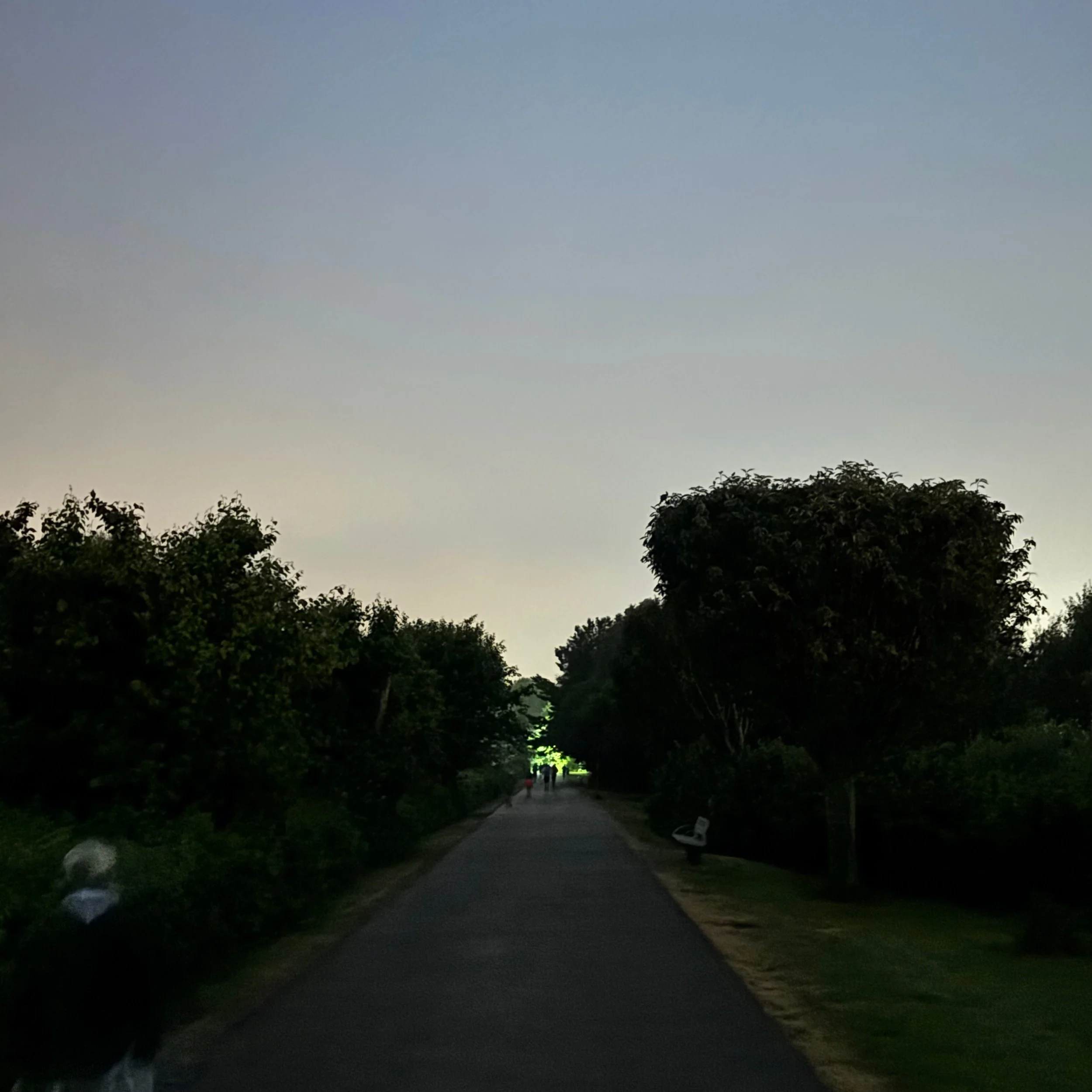
Daylight brought renewed resolve, and my spirits rose with the morning sun after what had been a difficult night. By this stage, I was really beginning to hurt, particularly through my feet. Believe it or not, the walking sections of each hour had become more uncomfortable than the running. However, they still felt necessary, giving the impact time to fade from my legs before I began again.
I knew the goal was close. The closer I came to it, the slower both the time and distance seemed to accumulate.
People often ask whether I experience a surge of adrenaline at the end of an ultramarathon, and I always say no.
The rush, for me at least, isn’t at the end of the race. It comes when you reach the point where you know you’re going to make it, no matter what. In this case, it was the goal rather than the finish line.
Eventually, my watch reached 100 miles.
Twenty-two hours and eleven minutes.
When I’d first discovered my mishap with the tracker, I’d been determined to carry on afterwards and account for the missing official laps. But after reaching the 100-mile marker, I slipped out of race mode. The pain and fatigue I’d resisted for so long washed over me like a bucket of warm water poured across my head, and I couldn’t fight my way back into the mindset that had carried me to that point.
Physically and mentally, my race was run.
I completed one more lap before retiring to the PRC camp and resting my aching body until only a few minutes remained before the 24-hour deadline. All credit to my club mates, many offered to walk another few laps with me in an attempt to get me going again. But I wasn’t for moving, and the longer I remained seated, the less physically possible continuing became.
In truth, I’ve struggled this week with how I allowed my race to end.
On the one hand, I’d defined success for myself, gone out and achieved it.
On the other, I remain a little conflicted that I couldn’t find a way to push on and make full use of the time the challenge allowed.
I suppose, if anything, it was a reminder of the power contained within a purpose.
Purpose can be a potent source of will and determination, driving us onwards long after comfort and common sense have suggested we stop. But once that purpose has been fulfilled, its sudden absence can have a devastating effect.
The biggest lesson reinforced for me, however, was the need for adaptability.
The plan gave me somewhere to start.
Experience told me when to leave it behind.
It’s difficult to argue with any race result that leaves you with better judgement.
Watching so many of my club mates achieve distances and results that may once have felt unimaginable was every bit as rewarding as anything I accomplished myself. Seeing people redefine what they believe themselves capable of is a reminder that this sport has never really been about the numbers, it’s about gradually expanding the boundaries of possibility.
Finally, a huge thank you to the We Run Wild team, the volunteers, marshals and everyone who helped make the event happen. They inherited a race with a great reputation and managed to make it feel distinctly their own.